The Windsor-Essex real estate market is not standing still, and it is not as simple as saying “it is good” or “it is bad.”
The truth is more balanced than that.
The second quarter MLS® statistics released by the Windsor-Essex County Association of REALTORS® show a market that is still active, but more careful. Average sale prices remained fairly steady across the quarter, but buyers are more selective, sellers have more competition, and pricing strategy has become extremely important.
For both buyers and sellers, understanding the current trends matters. Real estate decisions are too important to be based on headlines, old expectations, or what the market felt like a few years ago.
Today’s market requires clear information, honest advice, and a strategy based on what is actually happening now.
Q2 Average Sale Prices Stayed Fairly Steady
Looking at the second quarter of 2026, average monthly sale prices in Windsor-Essex stayed relatively consistent from April to June:
| Month | Average Sale Price |
|---|---|
| April 2026 | $572,500 |
| May 2026 | $565,000 |
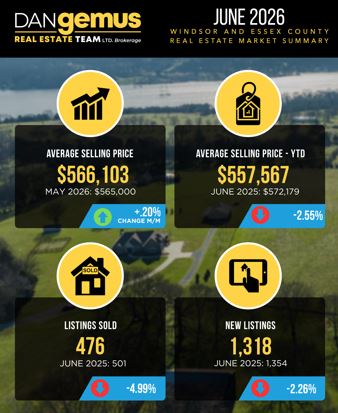
| June 2026 | $566,103 |
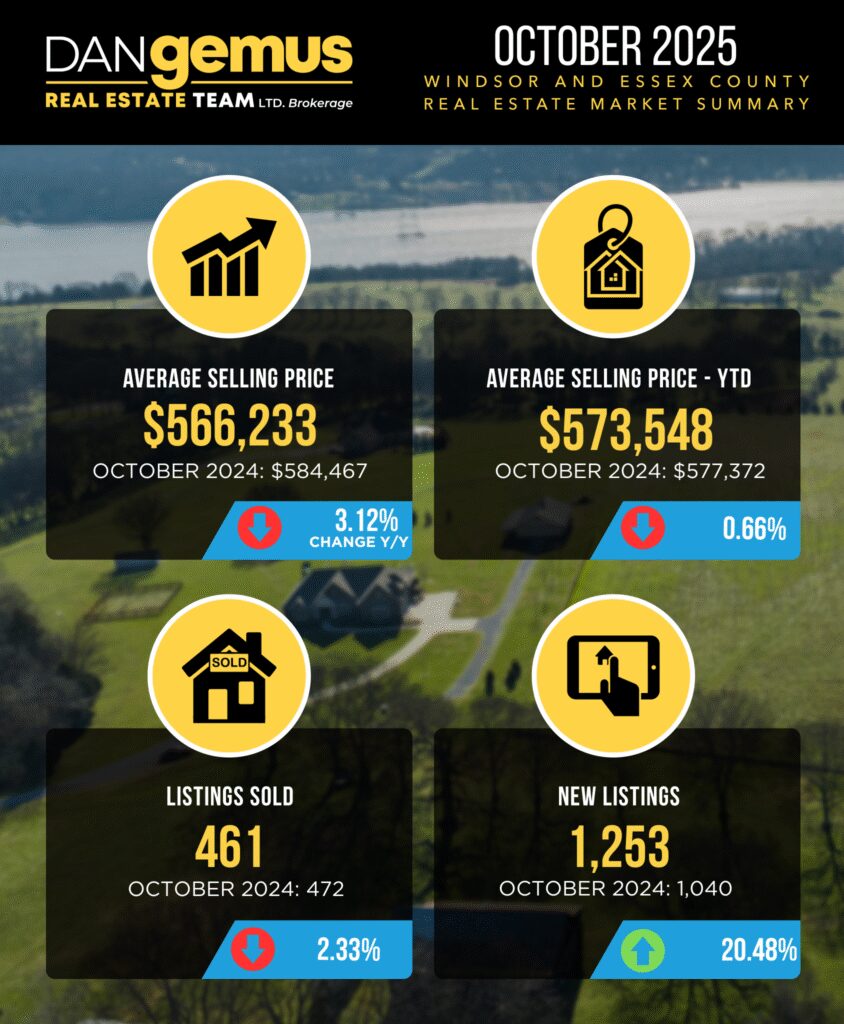
From April to June, that is only about a 1.12% shift across the quarter. After the first half of the year, the average residential sale price has dropped 2.55% from $572,179 to $557,567.
This is an important point.
This is not a market in freefall. The average sale price has not collapsed. But that does not mean every home is selling easily, and it does not mean sellers can price based on the peak of the 2021/22 market.
The average price gives us one piece of the picture. The real story comes from looking at buyer behaviour, inventory, pricing, financing, and how individual neighbourhoods are performing.
Buyers Are Still in the Market, But They Are More Selective
One of the biggest shifts we are seeing is the behaviour of buyers.
There are still buyers in the Windsor-Essex market. Homes are still selling. In some cases, well-priced homes are still attracting strong attention, multiple offers, and even over-asking sale prices.
But buyers are more selective than they were during the peak market.
They are taking more time. They are comparing more options. They are paying closer attention to monthly payments, condition, location, property taxes, insurance costs, and future resale value.
That does not mean buyers are not serious. In many cases, the buyers who are active right now are very serious. They are just more cautious, and they are making decisions with sharper pencils.
Several factors are contributing to that.
Affordability remains a major consideration. Even when interest rates move down from their peak, borrowing costs are still very different from what buyers experienced in 2021 and 2022. Employment confidence, local economic uncertainty, and investor caution can also affect buyer activity.
When people feel uncertain, they do not always stop looking. But they may slow down, offer more conservatively, or wait for the right value.
Peak Prices Happened in a Different Borrowing Environment
This is one of the most important things for sellers to understand.
When home prices were at their peak, buyers were operating in a very different borrowing environment. Interest rates were extremely low, which meant monthly payments were more manageable. Buyers could often afford higher purchase prices because the cost of borrowing was lower.
Today, the math is different. A buyer may like a home. They may see the value in it. They may even want to make an offer. But if the monthly payment does not work, the offer cannot work.
That does not mean your home is not valuable. It means buyers are working with different numbers.
This is where some sellers can get caught. They remember what homes were selling for at the peak of the market, but today’s buyers are not shopping with peak-market financing conditions.
Pricing for 2021 or 2022 buyer behaviour in a 2026 affordability market does not work.
Sellers need to price for the market they are in now, not the market they wish they were still in.
Inventory Numbers Need Context
Inventory is another area where the headline numbers do not always tell the whole story.
Overall, Windsor-Essex is currently sitting at approximately 3.9 months of inventory, compared to 4.6 months in May. On the surface, that suggests inventory has tightened somewhat.
But it is also important to look beyond the basic number.
Many homes are being cancelled and relisted. Others are lingering on the market longer than sellers expected. This can make it feel like there are more new listings than there actually are, because some of the “new” inventory is not truly new. It may be the same property returning to market with a new price, new strategy, or fresh listing period.
That matters because inventory affects buyer perception.
When buyers see a lot of options, they often feel less urgency. When they see homes sitting, they may assume there is room to negotiate. When they see homes sitting and/or repeated relists, they may wonder whether a property was overpriced, whether something went wrong, or whether the seller is becoming more motivated.
This is why pricing and positioning matter so much.
Roughly 1 in 3 Homes Are Selling
On average, approximately 1 in 3 homes are selling in the current Windsor-Essex market.
That is not meant to scare sellers. It is meant to give important context.
There is still a market for homes that are priced well, presented well, and positioned properly. Those homes are moving. Some are still receiving multiple offers. Some are still selling above asking.
But the market is less forgiving.
During the hottest market, some homes could be priced aggressively and still receive heavy attention. Today, buyers have more information, more options, and more caution.
A home that is priced correctly can stand out.
A home that is priced too high may simply help the competition look better.
Do You Want to Price In the Market or Out of the Market?
This is one of the most important questions a seller can ask.
Do you want to price in the market or out of the market?
A home priced in the market gets attention.
A home priced out of the market gets watched.
A home priced in the market creates more urgency.
A home priced out of the market can lose momentum.
A home priced in the market stands out from the competition.
A home priced out of the market blends in.
Pricing is not just about the list price. It affects how buyers perceive the home, how many showings are booked, how quickly feedback comes in, whether offers are generated, and how strong those offers may be.
Appraisals Can Become a Factor
In a more careful market, appraisals can become an important part of the conversation.
Even if a buyer is willing to offer a certain price, the lender may still require an appraisal to confirm that the property supports the purchase price. If the appraisal comes in lower than the accepted offer, it can create a financing issue.
For example, if a home sells for $600,000 but the appraisal supports $575,000, the lender may base financing on the lower value. That gap has to be addressed.
Sometimes the buyer may need to bring in additional funds. Sometimes the price may need to be renegotiated. Sometimes the deal becomes more difficult to hold together.
This is another reason overpricing can be risky.
The goal is not just to attract an offer. The goal is to attract an offer that can successfully close.
Proper pricing helps protect the sale from the beginning.
Every Neighbourhood and Price Point Is Different
It is also important to remember that Windsor-Essex is not one single market.
Each neighbourhood, niche, price point, and property type has its own supply and demand.
A well-priced home in a desirable neighbourhood may perform very differently than a similar home in an area with more competition. Entry-level homes may behave differently than luxury homes. Rural properties, condos, townhomes, waterfront homes, investment properties, and family homes can all experience different levels of demand.
This is why broad market statistics are useful, but they are only a starting point.
The real question is not just, “What is the Windsor-Essex market doing?”
The better question is, “What is happening in your specific segment of the market?”
That is where local experience matters.
What This Means for Sellers
For sellers, the message is not that the market is bad.
The message is that the market is the market. We have to work with the fluctuations and overall conditions it, not against it to realize a successful sale.
If your home is priced well, shows well, and is marketed properly, there is still opportunity. Buyers are still out there and they’re ready to purchase the right home.
But sellers need to be honest about their motivation and the competition.
Today’s buyer is not only asking, “Do I like this house?”
They are asking:
Can I afford the payment?
Does the price make sense compared to other options?
What work does the home need?
How long has it been on the market?
Is the seller realistic?
Will the home appraise?
Do I feel confident moving forward?
That means sellers need a strategy that reflects the current market, not just a number that reflects their hope.
What This Means for Buyers
For buyers, this market may offer opportunity.
In some situations, there may be more room for conditions, negotiation, inspections, financing clauses, and thoughtful decision-making than there was during the peak market.
That can be a positive thing.
Buyers may be able to compare homes more carefully, avoid rushed decisions, and negotiate terms that protect them.
But buyers also need to understand that the best homes are still the best homes. A property that is priced well, shows well, and fits the needs of many buyers can still move quickly so a “watch and wait approach” may still lead to disappointment.
A more careful market does not mean every seller is desperate. It means good advice matters on both sides.
The Bottom Line
The Q2 Windsor-Essex real estate market is not frozen. It is not crashing. It is not without opportunity.
But it is more careful.
Buyers are more selective.
Sellers have more competition.
Financing matters.
Appraisals matter.
Neighbourhood-level trends matter.
And pricing matters.
For sellers, the goal should not be to test the market. The goal should be to understand the market and position properly within it. Proper pricing and presentation matter more than ever.
For buyers, the goal should not be to wait forever for the perfect deal. The goal should be to understand value, protect yourself, and move with confidence when the right opportunity appears.
Real estate decisions are significant. Whether you are buying, selling, or simply trying to understand your options, honest market advice matters.
At The Dan Gemus Real Estate Team, we help buyers and sellers across Windsor, LaSalle, Amherstburg, Essex, Kingsville, Leamington, Lakeshore, Tecumseh, Belle River, and the surrounding communities make informed decisions with clear advice, local experience, and a strategy built around the market we are actually in.
*This blog is meant for information purposes and is not intended to replace legal, accounting or financial advice, nor is it intended to solicit those under contract with another brokerage.